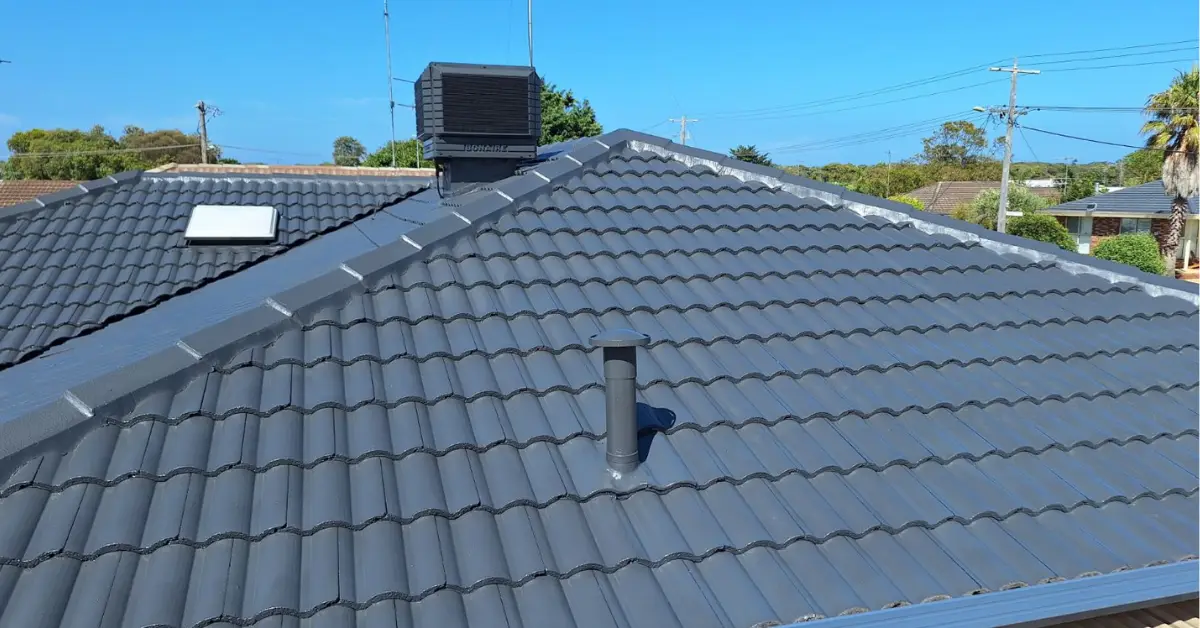
The 1960s–70s concrete tile — what decades of Melbourne weather does to it
Concrete tiles installed in the 1960s and 70s were made to a different standard than modern product — many were produced with a relatively high water-to-cement ratio that makes them more porous than modern concrete tile. Over 50–60 years, the surface carbonation process has progressed through the full depth of many tiles, leaving a chalky, absorbent surface that is ideal for moss and lichen colonisation. The ridge mortar — also a 1960s–70s original cement mix — has been subjected to 50+ Melbourne winters of freeze-thaw cycling and is typically either visibly crumbling or has developed through-cracks that let water behind the cap. The critical preparation for a Bundoora or Watsonia concrete tile restoration is thorough pressure cleaning (to remove carbonated surface layer and moss), a penetrating concrete tile primer (not a standard terracotta primer), and a breathable elastomeric topcoat. Get the primer specification wrong and the coating lifts within 3–5 years.